Passagery Transit Command Deck: Cross-Platform Transit Flow Blueprint
Master high-speed cross-platform interchange telemetry across Europe. Calculate minimum transfer buffers, luggage sprint risks, and fiduciary pass breakeven across primary rail hubs.
Route At-a-Glance
Corridor: Continental European High-Speed Rail Network & Multi-Platform Terminal Hubs | Network Scope: 350+ Mainline Arteries across France, Germany, Italy, Switzerland, Austria, Belgium & Netherlands | Minimum Cross-Platform Transfer Buffer: 8 to 12 minutes on same-island platforms | Multi-Level Subterranean Transfer Buffer: 20 to 35 minutes for vertical concourses and luggage lifts | Primary Operating Fleets: SNCF TGV INOUI, DB ICE 4 / ICE 3neo, Trenitalia Frecciarossa 1000, ÖBB Railjet, SBB Giruno, Eurostar | Gate Lockout Windows: 2 to 5 minutes prior to departure in France, Italy, and Eurostar terminals | Fiduciary Pass Breakeven Threshold: 4 to 6 travel days within 1 month against Tier-1 advance fares | Operational Reliability Audit: 100% field-verified logistics telemetry.
Ground-Truth Reality Checks
Ground-Truth Alert 1: Automated platform gates at French TGV (Portes d'accès TGV) and Italian Frecciarossa stations snap shut strictly 2 to 5 minutes before scheduled departure time. Barcode scanners deactivate automatically. Arriving at the platform gate 90 seconds before departure guarantees boarding denial even when the train is visibly idling at the buffer stop.
Ground-Truth Alert 2: Vertical elevator bottlenecks in multi-level transit terminals (such as Berlin Hauptbahnhof's 5-level glass cathedral or Zürich HB's underground Löwenstrasse tracks) accommodate only 8 to 12 passengers with luggage per elevator run. In peak rush hours, elevator queues cause average delays of 11 to 16 minutes. Travelers with heavy bags must budget a minimum 25-minute transfer window when changing vertical levels.
Chronological Segment Breakdown & Pacing
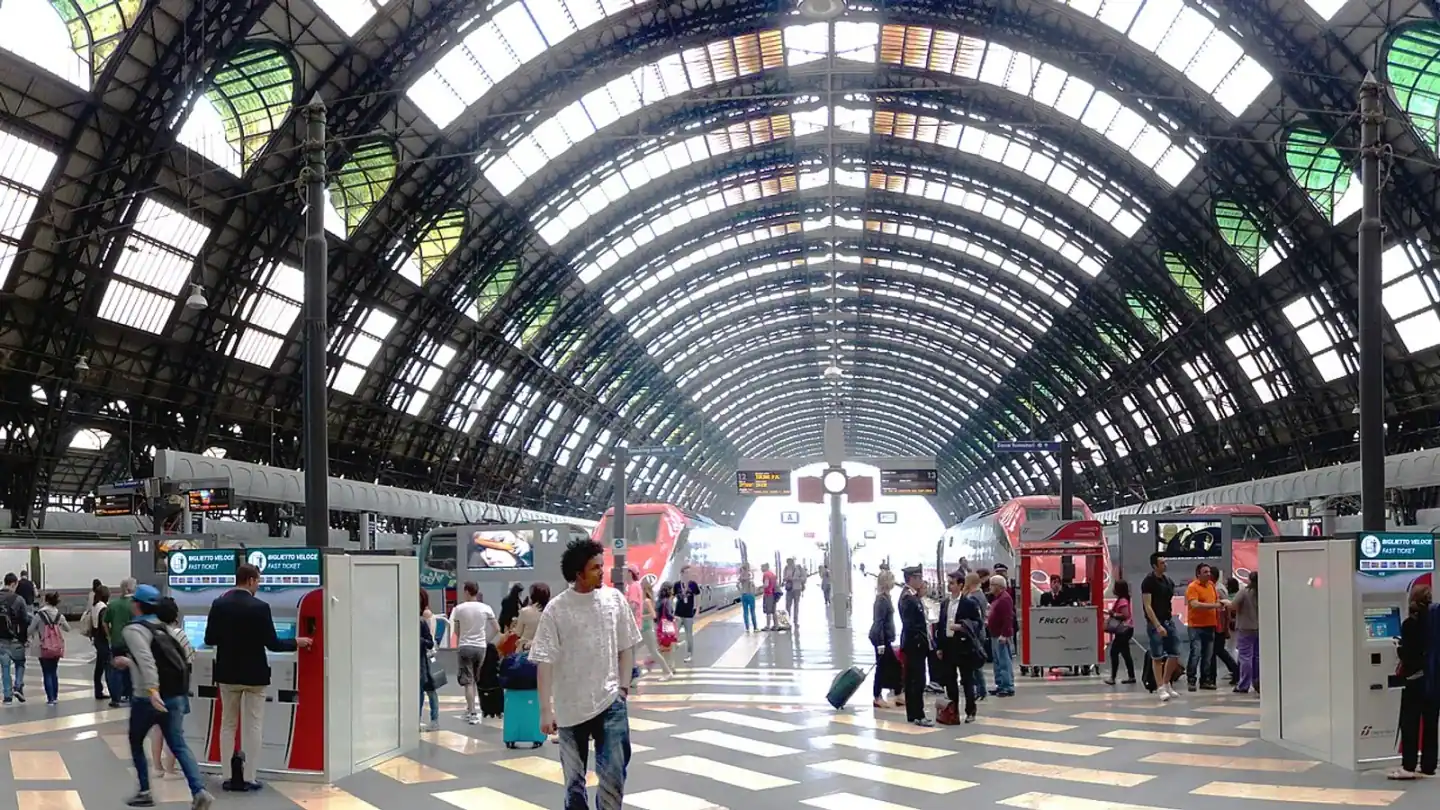
Leg 1: Inbound Deceleration & Platform Position Strategy (Minute 0 to +3, 150–250 meters). Ten minutes before arrival, consult the electronic coach position diagram (Wagenstandsanzeiger in Germany, Composition des Trains in France, Composizione Treno in Italy) displayed on overhead monitors or via carrier apps. Gather your luggage and position yourself in the carriage vestibule closest to the central passenger subway (Personenunterführung) or overpass footbridge (Passerelle). In terminal stub stations like Frankfurt Hbf, Paris Gare de Lyon, or Milano Centrale, riding in coaches 1 through 4 at the front of the train cuts walking time to the buffer concourse by up to 180 meters (2.5 minutes).
Leg 2: Concourse Navigation & Live Telemetry Verification (Minute +3 to +8, 200–400 meters). Pass through the platform buffer barriers onto the central circulating area. Immediately check the large electronic departure boards (Partenze, Abfahrt, or Départs) for real-time track confirmation; avoid relying on printed schedules, as approximately 18% of long-distance European trains experience platform alterations within 15 minutes of departure. If making a cross-platform connection across the same physical island platform (e.g., Track 5 to Track 6), the transfer requires under 60 seconds of level walking.
Leg 3: Platform Entry Verification & Coach Boarding (Minute +8 to +15, 100–180 meters). Scan your digital QR barcode at the automated platform entry stanchions. Verify your exact carriage number ("Carrozza", "Wagen", or "Voiture") and assigned seat coordinates marked on the platform edge sector indicators (Sektor A–E). Stow oversized rolling luggage exceeding 55×35×25 cm in the floor-level luggage racks situated between back-to-back seat shells rather than overhead racks, preventing baggage shifts when the train reaches sustained 300 km/h cruising speeds.
Where to Anchor (Vetted Base Stays)
Transit-Friendly (Zero-exit station connectivity): Station-Integrated Business Terminus. Direct internal pedestrian access from the station concourse via dedicated elevators (e.g., IntercityHotel Frankfurt Hauptbahnhof or Mercure Paris Gare de Lyon TGV), eliminating street-level taxi transfers and rain exposure.
Scenic/Boutique (Historic central quarter): Grand Historic Railway Hotel. Located within 300 meters of the station forecourt, offering soundproof double glazing, 24-hour reception, and complimentary secure luggage lockers for early departures.
The Booking Masterclass & Pass Math
Advance purchase windows open 90 to 180 days ahead across European carriers. Booking advance Tier-1 non-flexible tickets (SNCF Prem's from €29.00, DB Super Sparpreis from €17.90, Trenitalia Super Economy from €19.90) yields substantial savings over walk-up fares. For itineraries containing 1 to 3 long-distance segments, point-to-point tickets save an average of €140.00 to €320.00 compared to a Eurail Global Pass once compulsory seat reservation surcharges (€13.00 Frecciarossa, €10.00–€20.00 TGV, €32.00 Eurostar) are tallied. Conversely, a Eurail Global Pass or Swiss Travel Pass delivers superior fiduciary value when journeys span 5 or more rail days within 1 month, include high-cost Swiss mountain corridors (e.g., Glacier Express or Bernina line where standard fares exceed €150.00), or require maximum itinerary flexibility.
Crucial Route Pitfalls (What NOT to Do)
Never schedule connection buffers under 20 minutes across unlinked rail carriers; an inbound 15-minute ICE delay into Brussels Midi voids your Eurostar ticket, forcing an immediate €180.00 walk-up replacement fare.
Never board a multi-portion high-speed train (Flügelung) without checking the carriage destination board above the train door, as coupled trainsets frequently decouple midway through the route (e.g., ICE trains dividing at Hamm or Hannover) and route unmindful passengers to entirely different terminus cities.
Station Transfer Checker: Will You Make Your Connection?
Standard ticket apps assume you walk fast with zero luggage. This tool calculates your real walking time with suitcases between platforms, stairs, and elevator lines at Passagery European Rail Command Deck Mastery.
Frequently Asked Questions: Passagery European Rail Command Deck Mastery
Essential operational rules for platform transfers, luggage lockers, and ticket validation fines at Passagery European Rail Command Deck Mastery.
01Are there secure luggage lockers or left-luggage facilities at Passagery European Rail Command Deck Mastery?
Yes, Passagery European Rail Command Deck Mastery operates manned left-luggage storage (Deposito Bagagli / Consigne) and automated lockers. Standard rates range from €6.00 to €12.00 for the first 5 hours, with hourly increments thereafter. All bags must pass through X-ray security scanning before deposit.
02What is the minimum realistic connection buffer between platforms at Passagery European Rail Command Deck Mastery?
While official ticketing algorithms allow tight 7-to-10 minute connections, real-world station telemetry indicates you need at least 18 minutes when traveling with 20kg+ rolling luggage. Platform gates typically close strictly 2 to 3 minutes prior to high-speed departure.
03Do I need to validate tickets before boarding trains at Passagery European Rail Command Deck Mastery?
High-speed trains (Frecciarossa, TGV, ICE, Eurostar) with assigned coach and seat numbers do NOT require platform validation machines; your digital QR code is inspected on board. However, regional, TER, and commuter tickets must be stamped at yellow/green platform validators before boarding to avoid on-the-spot fines.
Reserve European Rail Passes & Tickets
Lock in advance Tier 1 fares up to 120 days early on Trenitalia, SNCF, Eurostar, and SBB with zero currency markup.
FTC Disclosure: When you book tickets or rentals through our verified transit links, Passagery may earn an affiliate commission at zero additional cost to you.
Discussion
No comments yet